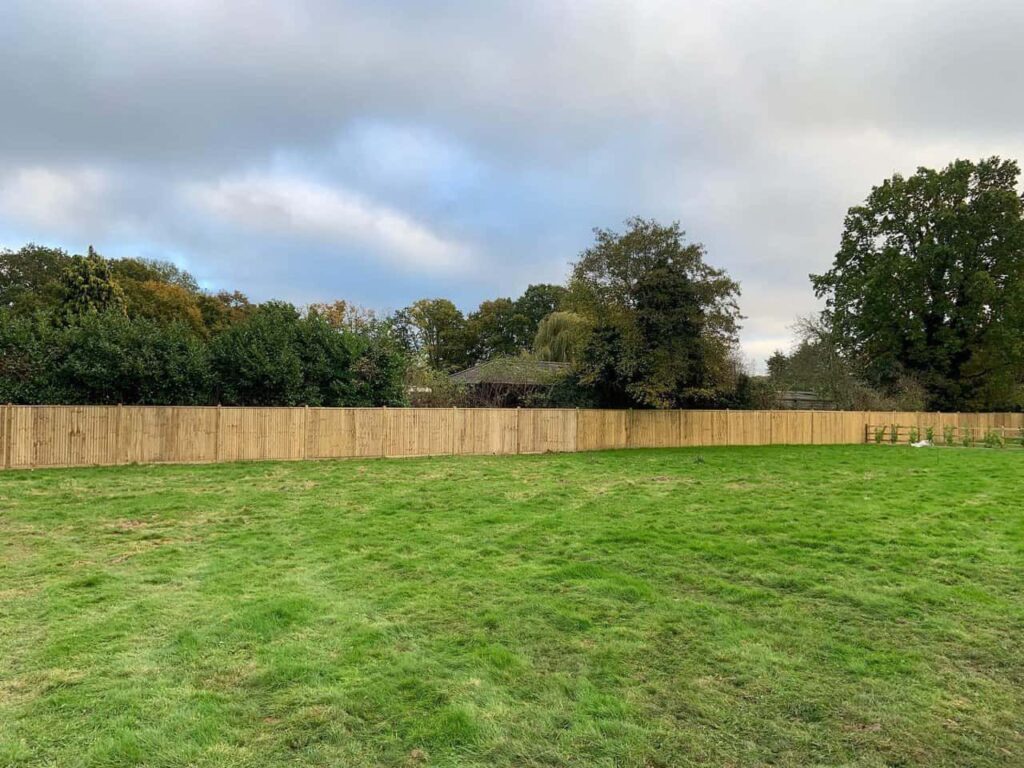
How Do You Choose the Right Type of Fencing for Your Property?
Choosing new fencing can have a significant effect on how a garden looks, feels and functions. A fence may provide privacy, create a clearly defined boundary, separate different parts of an outdoor space or simply replace an ageing structure that is becoming increasingly difficult to maintain. Because properties and gardens vary considerably, there is no single fencing style that is suitable for every situation.
For homeowners in Brandon, Suffolk, the most useful approach is to begin by deciding exactly what the new fence needs to achieve. Privacy requirements, garden layout, exposure, ground conditions, access and appearance can then be considered before choosing the most appropriate fencing construction.
What Should You Consider Before Choosing New Fencing?
Fencing should be selected as a complete boundary system rather than purely according to the appearance of individual panels or boards. Posts, rails, panels, edging details and gates all need to work together.
A fence that is well suited to its location and professionally installed can provide a much more coherent boundary than one selected simply because a particular design looks attractive in isolation.
Decide What You Need the Fence to Do
The first question should be straightforward: why are you installing or replacing the fence?
Some homeowners primarily want greater privacy. Others need to define the garden more clearly, improve an untidy boundary or replace fencing that repeatedly leans or deteriorates.
In many cases, several objectives overlap.
Identifying the main priorities helps narrow down the available fencing options and prevents unnecessary features from being incorporated into the installation.
Consider How Much Privacy You Actually Need
Privacy is one of the most common reasons for installing garden fencing, but different properties require different levels of screening.
A garden that feels significantly overlooked may benefit from a more solid boundary, while another property may only require modest separation.
The position of seating areas and frequently used parts of the garden can also influence where screening is most valuable.
Rather than assuming maximum enclosure is always preferable, the fencing should respond to the actual sightlines around the outdoor space.
Solid Fencing Can Provide Greater Screening
Where privacy is a priority, solid or closely boarded fencing can create a clearly defined visual boundary.
This can help make the garden feel more separated from its surroundings.
However, a substantial fence also becomes an important visual feature within the garden.
Its proportions, construction and appearance should therefore be considered carefully so that the boundary provides the required screening without feeling unnecessarily dominant.
Feather Edge Fencing Can Create a Continuous Boundary
Feather edge fencing uses overlapping vertical boards supported by rails and posts.
Its construction can provide a strong, continuous appearance and effective visual screening.
Because it is built along the boundary, it can also offer useful flexibility where the fence line has varying dimensions or changes in ground level.
As with any fencing system, its performance depends heavily on the quality and positioning of the supporting structure.
Fence Panels Offer a Consistent Layout
Panel fencing is another commonly considered option for residential gardens.
Individual sections are installed between supporting posts, producing a regular and clearly defined boundary.
Different panel designs can create different appearances and levels of screening.
The most appropriate choice should be based on how the garden is used and how much privacy is required rather than selecting a panel purely because of its decorative appearance.
Picket Fencing Can Maintain a More Open Character
Not every boundary needs to provide complete screening.
Picket fencing can clearly define an area while maintaining visibility through the boundary.
This can create a lighter and more open appearance than solid panels or continuous boarding.
Where the main objective is definition rather than privacy, this type of fencing may be more appropriate than constructing an unnecessarily substantial barrier.
Post and Rail Fencing Can Suit Open Boundaries
Post and rail fencing provides another solution where the purpose is primarily to establish a clear boundary.
Its open construction avoids creating the enclosed appearance associated with solid fencing.
The right choice depends on the character of the property and the function of the particular boundary.
A fence should provide the level of enclosure genuinely required rather than automatically maximising screening.
Different Boundaries Can Require Different Solutions
A property does not necessarily need exactly the same fencing around every side.
One boundary may require greater privacy because it sits beside a seating area, while another may simply need clear separation.
Choosing different fencing according to these practical requirements can make better use of the available space.
Where more than one style is used, the overall design should still feel coordinated.
Think About the Garden From the Inside
Homeowners often consider how a fence will look externally, but the internal face can have an even greater visual impact.
The boundary forms a backdrop to lawns, planting, patios and other garden features.
A fence that is disproportionately heavy or visually complicated can dominate the space.
The chosen style should therefore complement the garden when viewed from the areas where people actually spend their time.
Consider the Size of the Garden
The dimensions of an outdoor space can influence how different fencing styles appear.
A substantial solid boundary may create valuable privacy, but it can also make a compact garden feel more enclosed.
More open fencing can preserve a greater sense of space, although it naturally provides less screening.
The right balance depends on the property and the homeowner’s priorities.
Fence Height Is Only One Part of Privacy
It is easy to assume that privacy simply requires a taller fence.
In practice, sightlines are more complicated.
Changes in ground level, the position of surrounding features and the location of seating areas can all influence visibility.
A carefully planned fence should therefore consider where screening is actually required rather than focusing exclusively on overall height.
Width and Position Matter Too
A fence occupies physical space within the garden.
Its alignment can affect planting, paths and usable lawn areas.
Where the existing boundary has gradually moved or become irregular, installing new fencing provides an opportunity to create a more consistent visual line.
Accurate positioning contributes considerably to the appearance of the completed installation.
Wind Exposure Should Influence Fence Selection
Some boundaries experience considerably greater exposure than others.
A solid fence presents more surface area to strong winds than a more open design.
This does not automatically make solid fencing unsuitable for an exposed position, but it increases the importance of appropriate support and construction.
Fence type, post arrangement and location should therefore be considered together.
Posts Are Fundamental to the Fence
The panels or boards may receive most of the attention because they are highly visible, but the posts are fundamental to the structure.
If posts move, the fencing between them can begin to lean or become misaligned.
Selecting attractive panels without ensuring suitable support can therefore produce disappointing results.
A professional installation considers the complete fence rather than treating posts as a secondary detail.
Stronger Panels Cannot Correct Unstable Posts
Where an existing fence repeatedly leans, homeowners may assume that more substantial panels will solve the problem.
That is not necessarily the case.
If the underlying issue involves unstable or deteriorating posts, replacing the panels alone may leave the actual cause untouched.
The existing support structure should be assessed before deciding what needs replacing.
Ground Conditions Need to Be Considered
Fence posts rely on the ground around them for support.
Conditions can vary along the same boundary, particularly where landscaping or previous work has altered different sections.
Understanding the fence line before installation helps determine an appropriate approach to positioning and supporting the posts.
Ground conditions should therefore form part of the planning stage rather than being considered only once installation begins.
Sloping Boundaries Need Careful Layout
A fence running across changing ground levels requires additional planning.
Standard panels may need to be stepped, while other fencing constructions may allow the boundary to respond differently to the slope.
The objective should be to create a consistent appearance while avoiding unnecessarily large gaps underneath sections.
Planning levels before installation can significantly improve the finished result.
Consider Gaps Beneath the Fence
Ground levels are not always perfectly consistent.
If this is ignored, the completed boundary can contain noticeable gaps underneath individual sections.
Whether this matters depends partly on the purpose of the fence.
A decorative boundary may have different requirements from one intended to provide a more enclosed garden.
The ground and fencing layout should therefore be considered together.
Garden Access Should Be Planned at the Same Time
A fence is rarely just a continuous line with no interruptions.
Many boundaries require gates or other access points.
These should be planned as part of the overall installation rather than added as an afterthought.
The position and width of an entrance should reflect the routes people regularly use and any equipment that needs to pass through it.
Paths Can Influence Gate Position
Where an existing or planned path meets the boundary, the gate should ideally work naturally with that route.
An awkwardly positioned entrance can make everyday movement less convenient even when the fencing itself is well installed.
Considering paths, gates and fencing together can create a more practical overall layout.
Think About How the Outdoor Space Is Used
A garden designed primarily around lawns and planting may require different fencing from one containing frequently used seating and activity areas.
The position of these features can influence privacy and access requirements.
For example, a particular part of the boundary may benefit from greater screening because it directly adjoins the main outdoor living area.
Selecting fencing according to actual garden use makes the installation more purposeful.
Existing Fencing Can Reveal What Needs Improving
Before removing an old fence, it is worth understanding why it is no longer suitable.
Are the panels deteriorating while the posts remain sound? Are several posts leaning? Has the boundary gradually become uneven? Is the fencing still structurally reasonable but no longer providing enough privacy?
These observations can help identify which aspects of the new installation deserve particular attention.
One Damaged Panel Does Not Necessarily Mean Full Replacement
Localised fencing damage can sometimes be addressed without replacing an entire boundary.
If one panel has deteriorated while surrounding sections and posts remain serviceable, a targeted repair or replacement may be appropriate.
Full renewal becomes more relevant when deterioration is widespread, numerous posts are unstable or the overall fencing no longer meets the property’s requirements.
The extent of the work should match the actual condition of the boundary.
Repeated Repairs Can Indicate a Wider Problem
Although individual fencing repairs can be perfectly sensible, repeated problems across several sections may justify looking at the boundary more broadly.
If posts are moving in different areas or numerous panels are deteriorating, continuing to repair each problem separately may become increasingly disruptive.
A complete assessment can determine whether localised work remains appropriate or whether a more coordinated replacement would provide a better result.
Leaning Fencing Should Be Properly Investigated
A fence that leans is displaying a symptom rather than explaining the cause.
The issue may involve posts, ground conditions, deterioration or a combination of factors.
Simply pushing the fence back into position does not necessarily resolve the reason it moved.
Where leaning repeatedly develops, the supporting construction should be assessed before deciding on the repair.
Vegetation Can Affect the Practical Boundary
Dense planting can conceal fencing and make its true condition difficult to see.
It may hide damaged boards, leaning sections or deteriorating posts.
Vegetation can also make access for maintenance more difficult.
Understanding the complete fence line helps establish whether isolated repairs or more extensive work is required.
Consider the Relationship Between Fencing and Planting
Fencing often provides the backdrop for shrubs, borders and other planting.
The style chosen can therefore influence the appearance of the surrounding garden.
A simple boundary may allow planting to remain the main visual feature, while more decorative fencing can become part of the design itself.
Neither approach is automatically better; the important consideration is how the elements work together.
The Length of the Boundary Changes Its Visual Impact
A design that looks attractive across a short sample can appear very different when repeated along an entire garden.
Long boundaries often benefit from consistency and careful proportions.
Highly elaborate designs can become visually dominant when used extensively.
Considering the complete fence line before choosing the style can prevent the finished installation from overwhelming the garden.
Think About Future Garden Improvements
If other outdoor work is planned, it makes sense to consider it before the new fence is installed.
Changes to paths, planting, seating areas or garden access may affect where gates should be positioned or where greater privacy will be useful.
Planning these elements together can reduce the need to alter newly installed fencing later.
The Fence Should Complement Other Outdoor Features
A boundary does not exist in isolation.
It sits alongside lawns, paths, patios, planting and other garden elements.
Choosing a fencing style that works with these features can create a more coordinated appearance.
This does not require everything to match exactly. The objective is simply to avoid a boundary that feels disconnected from the rest of the outdoor space.
Maintenance Requirements Are Worth Considering
External fencing is continually exposed to changing weather conditions.
Whatever style is selected, it should be inspected periodically and maintained appropriately for its construction.
Keeping vegetation under control and identifying loose or deteriorating components early can help prevent minor problems from developing further.
The ability to access the fence for routine maintenance should also be considered when planning surrounding planting.
Decorative Appearance Should Not Replace Practical Design
It is natural to want new fencing to improve the appearance of a property.
However, visual appeal should not come at the expense of function.
A decorative fence that does not provide the required privacy, access or structural suitability will not fully meet the homeowner’s needs.
The most successful installations balance appearance with practical requirements.
A Simple Fence Can Still Transform a Garden
Improving a boundary does not require an unnecessarily complicated design.
Straight alignment, consistent proportions, appropriate materials and careful installation can make a substantial difference to how organised an outdoor space feels.
A straightforward fence that suits the garden often produces a better result than adding decorative details that serve no practical purpose.
Installation Quality Is Just as Important as Fence Style
Choosing between panels, feather edge, picket or another fencing design is only part of the process.
Accurate post positioning, suitable support, correct alignment and careful fitting influence how the complete boundary performs.
Even an appropriate fencing type can become problematic when the supporting installation is inadequate.
Professional workmanship is therefore fundamental to achieving a dependable finished boundary.
The Best Choice Starts With Assessing the Property
There is no benefit in recommending the same type of fencing for every home.
At Fast Fix Fencing Brandon, we assess fencing requirements in Brandon, Suffolk by considering the purpose of the boundary, privacy requirements, existing condition, ground levels, exposure, garden use and access.
This provides a clearer basis for deciding whether solid panels, feather edge fencing, a more open style or another suitable solution is appropriate.
The aim is to create a boundary that genuinely works for the property rather than simply installing whichever fencing type happens to be most familiar.
Conclusion
Choosing the right type of fencing involves balancing privacy, appearance, garden use, exposure, ground conditions and the practical requirements of the boundary. Solid panels and feather edge fencing can provide substantial screening, while picket, post and rail or other more open designs may be more appropriate where clear definition is the main objective.
The visible fencing is only part of the installation. Posts, alignment, ground conditions, gates and the relationship with surrounding garden features all contribute to the finished result. Existing fencing should also be assessed carefully, as an isolated damaged section does not automatically mean the entire boundary needs replacing.
If you are considering new or replacement fencing for your property in Brandon, Suffolk, contact Fast Fix Fencing Brandon. We can assess your existing boundary and recommend an appropriate fencing solution based on how you want the garden to look and function.
Call us on: 01842 771 493
Click here to find out more about Fast Fix Fencing Brandon
Click here to complete our contact formand see how we can help with your fencing needs.